
Oli-sealed pumps
Oil-sealed vacuum pumps are an established choice for producing rough and medium vacuum. The oil seals and lubricates the pump's internal components, enabling efficient and durable operation in continuous use and under varying process conditions. The pump can be serviced in the field without requiring specialized expertise.
Applications and suitability
Oil-sealed pumps are suited to a wide range of industrial and research processes that require continuous rough or medium vacuum. The pump works both in a single production line and as part of a centralized vacuum system. Typical applications include:
- Vacuum coating and heat treatment
- Food packaging and freeze-drying
- Composite and resin degassing
- Vacuum drying and leak testing
- Backing pump for a Roots blower or a higher-vacuum pump
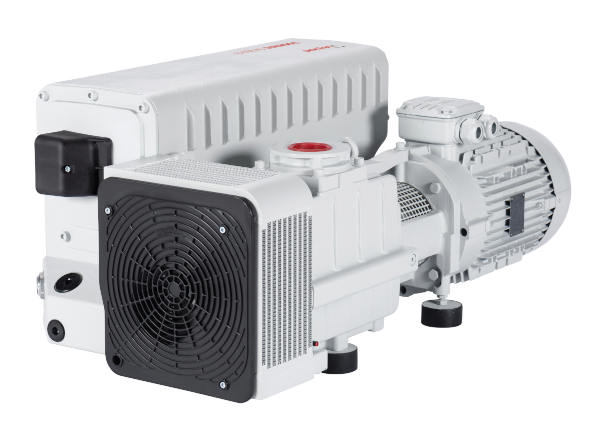
When an oil-sealed pump is the right choice
An oil-sealed pump is the standard choice when:
- The process generates moisture or gases that are pumped continuously.
- A gas ballast handles condensation without a separate procedure.
- You need a base pump for a centralized vacuum system.
- You want to combine the pump with a Roots blower to extend the vacuum range.
Oil-sealed pumps also serve as backing pumps for higher-vacuum pumps such as turbomolecular or diffusion pumps.
When an oil-sealed pump is not the right choice
Consider a dry pump if:
- The process involves aggressive chemicals or solvents that react with the oil.
- There's a risk of cross-contamination between the pump oil and the process gas, such as in semiconductor manufacturing or certain laboratory applications.
- Minimizing maintenance intervals is critical, and oil changes are difficult to carry out.
Consider a scroll pump or diaphragm pump if:
- You need a fully oil-free vacuum and the flow rate is small, under 10 m³/h.
If you're not sure which type of vacuum pump best suits your application, ask us and we'll take a look together.
Mitä huomioida öljyvoideltua tyhjiöpumppua valitessa
Technical selection criteria
Vacuum pump technical criteria primarily determine which pumps are suitable for a given system. Flow rate, ultimate pressure, and process gas are the three factors that, in practice, narrow down the model.
Flow rate is the single most important parameter. It indicates how quickly the pump evacuates a space or maintains vacuum in a continuous process. The SV series covers 10–750 m³/h, Trivac D 4–65 m³/h and VACUBE covers 420–5000 m³/h — this alone is often enough to narrow down the right series.
Ultimate pressure indicates how low a pressure the pump can reach. A single-stage oil-sealed pump (SV series) typically reaches 0.5–1.5 mbar, while a two-stage pump (TRIVAC D) reaches below 0.1 mbar. If the process requires below 0.1 mbar, a single-stage pump alone won't be enough — you'll need either a two-stage pump or a combination with a Roots blower.
Process gas affects the choice of oil and whether a gas ballast is needed. Dry air is the simplest case. In a humid process, or when pumping water vapor, a gas ballast is practically essential, and water vapor tolerance varies significantly between models. Aggressive chemicals or solvents require a specialized oil, or may make an oil-sealed pump unsuitable altogether.
Operating environment
The operating environment affects both model selection and practical installation.
System compatibility is worth checking if the pump is being connected to an existing setup. Connection sizes, pumping speed, and ultimate pressure need to match the rest of the system. Oil-sealed pumps often work as part of a larger vacuum system, combined with a Roots blower or a higher-vacuum pump, in which case the sizing of the entire chain needs to be checked together.
Noise level is often an underrated criterion. In an open production space, noise level may not be decisive, but in laboratories or office-like environments it can be the single most important factor. The SV series typically has a noise level of 58–75 dB(A), depending on the model. This is worth checking before purchase if the environment is noise-sensitive.
Space and installation location have a practical impact on model choice. In the smaller D models, the integrated motor significantly reduces the required installation space. For larger models, it's also worth considering service access, since oil changes and filter maintenance require room around the pump.
Explosive atmospheres are a category of their own. If the installation site involves solvents or other flammable substances, an ATEX-certified version is required. The SV series includes an ATEX model for explosive atmospheres in groups IIA, IIB, and H2.
Cooling is a practical consideration, especially for larger models. The smaller SV models are air-cooled. In larger models, water cooling is an option, and in some applications it's practically required if the ambient temperature is high.
Maintenance and repairs
Maintenance interval and planning is something that can be anticipated with oil-sealed pumps. Oil changes are typically needed every 2,000–4,000 operating hours, and filters and vane condition are checked as part of scheduled maintenance. Scheduled maintenance is cheaper than corrective maintenance. Vacuum pump oil grade is always chosen based on the process.
Pump repairs are a practical consideration. Smaller maintenance tasks can be done on site, while larger repairs require moving the pump to a service facility. It's worth finding out in advance which option is available at your site, and how repairs to the planned pump model would work in practice.
Spare parts and their general availability are worth checking before purchasing a pump. With a well-known manufacturer's pump, original spare parts are available from a domestic distributor without international delivery times. This is critical if the process can't tolerate long downtime.
Replacement pump is often the thing that gets overlooked at the purchasing stage. If the process is critical and downtime isn't an option, the availability of a replacement pump for service or unexpected faults is an important criterion.
Technical support
Öljyvoideltu pumppu on pitkäikäinen laite ja sen mukana valitaan käytännössä se taho jolta saa tukea koko käyttöiän ajan. Kannattaa selvittää etukäteen kuka auttaa mitoituksessa ja mallinvalinnassa, kuka huoltaa ja millä varaosilla, ja miten toimitaan jos pumppu hajoaa kesken kriittisen prosessin.
Paikallinen erikoisliike ja suuri kansainvälinen toimittaja eroavat toisistaan merkittävästi juuri näissä asioissa. Yhteydenotto menee eri paikkaan, varaosien toimitusaika on erilainen ja kenttähuollon järjestäminen on eri asia.
Oil-sealed pumps
Active Vacuum represents four series of Leybold oil-sealed vacuum pumps. SOGEVAC, TRIVAC, and NEO are oil-sealed vane pumps, also known as rotary vane pumps. VACUBE, meanwhile, is an oil-sealed screw pump.
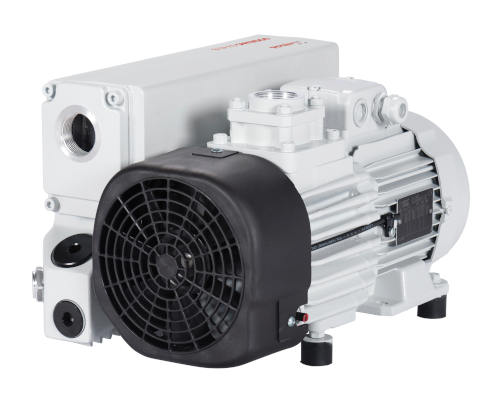
Leybold SOGEVAC
SOGEVAC, or the SV series, is Leybold's single-stage oil-sealed vane pump for continuous use. Smaller models feature an integrated motor, while larger models have a direct Roots connection. Lower noise level and lower energy consumption than comparable pumps from other manufacturers. Flow rate 10–750 m³/h.
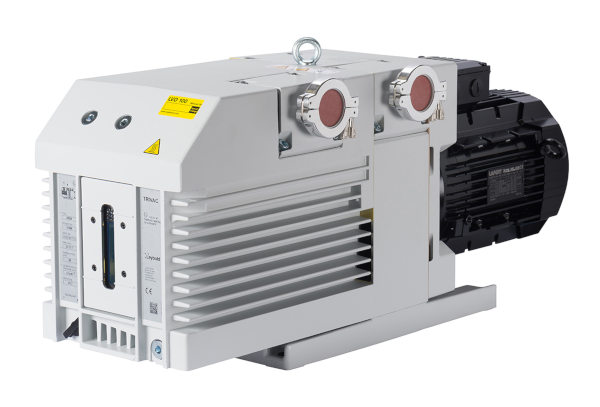
Leybold TRIVAC
TRIVAC is a two-stage oil-sealed vane pump, a typical choice for laboratory and research use as well as applications requiring good ultimate pressure with low flow rate. Flow rate 4–65 m³/h. The two-stage design enables a lower ultimate pressure than a single-stage pump, reaching as low as below 0.1 mbar.
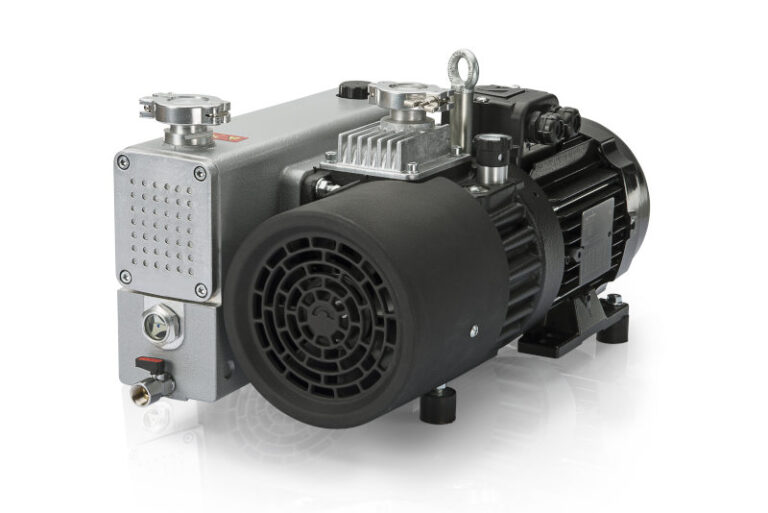
Leybold NEO
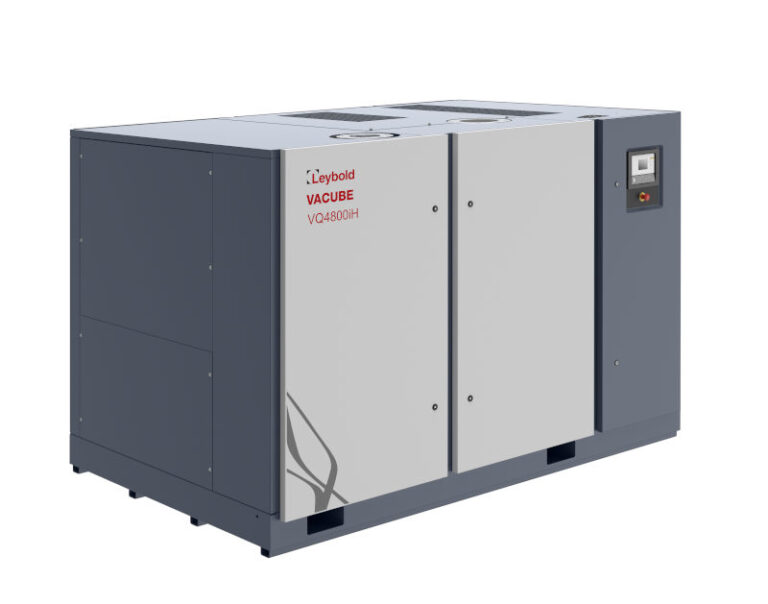
Leybold VACUBE
VACUBE is an oil-sealed screw pump. A typical choice for large-scale industrial processes requiring high flow rate and a stable ultimate pressure. Flow rate 420–4972 m³/h, ultimate pressure 0.35 mbar across all models. A complete system with integrated control, including filters, cooling, and a frequency converter.
Leybold - a pioneer in vacuum pumps
Leybold is one of the market leaders in vacuum technology and the industry's longest-standing specialist. Over 170 years of design and development expertise in a single specialty is reflected concretely in the products' performance, service life, and serviceability.

Why Active Vacuum?
Vacuum technology is our specialty, and you always deal with a person who knows vacuum pumps through hands-on field experience across the industry. Besides Leybold sales, we provide vacuum pump servicing, spare parts, and accessories. If your process is critical, we can provide a replacement pump for the duration of a new pump order, service, or repair.
Kysy tyhjiöpumpuista
The right pump type depends on the application, flow rate, and process conditions. Get in touch and we'll work out together which pump type and model fits your needs.
